
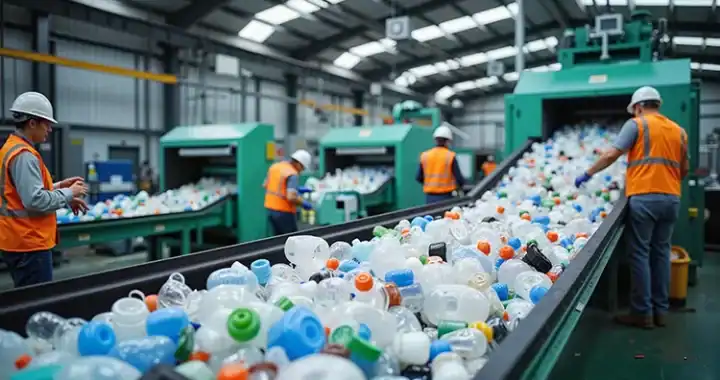
Selecting the appropriate brake system for your conveyor is critical for operational safety, equipment longevity, and regulatory compliance. Different industrial applications present unique challenges that require specific braking solutions. Understanding the strengths and limitations of each brake type will help you make an informed decision that protects your equipment, personnel, and bottom line.
Disc Brake Systems: Heavy-Duty Mining and Quarrying Operations
Best Applications: Large-scale mining conveyors, quarry operations, cement plants, and high-capacity material handling systems.
Disc brake systems excel in the most demanding industrial environments where massive loads and continuous operation are the norm. These systems feature a brake disc mounted on the conveyor drive shaft with hydraulically or pneumatically actuated calipers that clamp brake pads against the disc surface.
Why They’re Ideal for Heavy Industry: The superior heat dissipation capabilities of disc brakes make them perfect for continuous-duty applications where braking generates significant thermal energy. Mining conveyors often run 24/7 with loads exceeding 1,000 tons per hour, creating extreme braking demands that would overwhelm lesser systems. The large surface area of the disc allows heat to dissipate rapidly, preventing brake fade and maintaining consistent stopping power.
Disc brakes also provide exceptional modulation control, allowing operators to apply precise braking force for controlled deceleration rather than emergency stops. This capability is crucial in mining operations where sudden stops can cause material spillage, belt damage, or dangerous load shifts.
Key Advantages: High thermal capacity, excellent modulation, long service life, suitable for high-speed applications, and minimal maintenance requirements.
Drum Brake Systems: Manufacturing and Assembly Lines
Best Applications: Food processing facilities, automotive assembly lines, package handling systems, and moderate-duty manufacturing conveyors.
Drum brake systems utilize brake shoes that expand outward against the inner surface of a rotating drum. This design creates a self-energizing effect that amplifies the applied force, making drum brakes highly effective for moderate-load applications.
Why They’re Perfect for Manufacturing: The enclosed design of drum brakes provides excellent protection against contamination, making them ideal for food processing and clean manufacturing environments. The self-energizing action means less input force is required to achieve effective braking, reducing wear on actuating mechanisms and extending service life.
In automotive assembly lines, drum brakes provide the smooth, controlled stopping action needed to prevent damage to delicate components. The gradual engagement characteristic of drum brakes eliminates the jarring stops that could disturb precision assembly processes or cause parts to shift on the conveyor.
Key Advantages: Self-energizing action, contamination protection, smooth engagement, cost-effective, and proven reliability in moderate-duty applications.
Caliper Brake Systems: Precision Applications and Emergency Stopping
Best Applications: Pharmaceutical manufacturing, electronics assembly, precision machining operations, and any application requiring immediate emergency stops.
Caliper brakes mount directly to the conveyor frame and grip the belt or a dedicated braking surface. These systems provide instant, powerful braking action with minimal installation complexity.
Why They’re Essential for Precision Work: The immediate response of caliper brakes makes them indispensable in precision manufacturing where product quality depends on exact positioning and timing. In pharmaceutical packaging lines, for example, even slight belt overrun can cause product contamination or packaging errors that result in costly recalls.
The direct-grip design eliminates the mechanical complexity of other brake types, reducing potential failure points and ensuring reliable emergency stopping capability. This reliability is crucial in electronics manufacturing where a runaway conveyor could damage expensive components or create safety hazards.
Key Advantages: Instant response, simple installation, reliable emergency stopping, minimal maintenance, and compact design.
Thruster Brake Systems: High-Cycle Automated Operations
Best Applications: Airport baggage handling, automated warehousing, sorting facilities, and high-frequency start-stop operations.
Thruster brakes use spring-applied, air-released mechanisms that provide fail-safe operation. When air pressure is removed, springs automatically apply the brakes, ensuring the conveyor stops even during power failures.
Why They’re Critical for Automation: The fail-safe design of thruster brakes is essential in automated systems where human operators may not be present to respond to emergencies. Airport baggage systems, for instance, must continue operating safely even during power outages or system failures. The automatic engagement ensures conveyors stop immediately when control signals are lost.
The high-cycle capability of thruster brakes makes them perfect for sorting operations that require frequent starting and stopping. Unlike other brake types that may suffer from heat buildup during repeated use, thruster brakes are designed to handle thousands of cycles per day without degradation.
Key Advantages: Fail-safe operation, high-cycle capability, automatic engagement during power loss, and excellent reliability in automated systems.
Belt Grabber Systems: Steep Incline and Vertical Applications
Best Applications: Steep incline conveyors, vertical lifts, bucket elevators, and applications with significant back-driving forces.
Belt grabber systems clamp directly onto the conveyor belt using multiple pressure points to create maximum friction. This direct-contact approach provides superior holding power on inclined applications.
Why They’re Necessary for Inclined Systems: Traditional brake systems that act on drive components may allow belt slippage on steep inclines, creating dangerous runback conditions. Belt grabbers eliminate this risk by gripping the belt directly, preventing any movement regardless of drive system condition.
In mining operations with steep conveyor angles, belt grabbers provide the positive holding force needed to prevent catastrophic runback if the drive system fails. The multiple contact points distribute clamping force across the belt width, preventing damage while ensuring reliable holding power.
Key Advantages: Direct belt contact, superior holding power on inclines, prevents runback, and positive load control.
Selection Criteria and Best Practices
When selecting a brake system, consider these critical factors:
Load and Speed Requirements: Calculate maximum braking torque needed based on belt speed, load weight, and deceleration requirements. Include safety factors for emergency stopping conditions.
Environmental Conditions: Consider temperature extremes, moisture, dust, chemicals, and contamination risks that may affect brake performance and longevity.
Duty Cycle: Evaluate how frequently the brakes will be used and whether continuous or intermittent operation is required.
Safety Requirements: Ensure compliance with relevant safety standards (MSHA, OSHA, etc.) and consider fail-safe requirements for your specific application.
Maintenance Capabilities: Match brake complexity to your maintenance staff’s capabilities and available resources.
The right brake system is not just about stopping your conveyor – it’s about ensuring safe, efficient operation while minimizing maintenance costs and downtime. By understanding the unique advantages of each brake type and matching them to your specific application requirements, you can select a system that will provide years of reliable service while protecting your most valuable assets: your people and your operation.
Remember that proper installation, regular maintenance, and operator training are just as important as selecting the right brake type. When in doubt, consult with experienced brake system engineers who can evaluate your specific application and recommend the optimal solution for your needs.